 Depiction of hell, in the illuminated prayerbook, Très Riches Heures du duc de Berry, Folio 108, created between c. 1412 and 1416 by the Limbourg Brothers.
A critical factor has been the way that human spirituality has changed over time, moving from animism through polytheism and henotheism to monotheism.
In theological terms, the movement has been from “immanence” to “transcendence”, from integration to separation. Immanent spirituality in belief systems such as pantheism and animism is based on the recognition that Life, Spirit, sacredness is “in-dwelling”, permeating everything, everywhere. There’s only one world in animism and pantheism. There are no other-worldly domains, no heavens or hells, for the administration of rewards and punishments respectively.
By contrast, belief systems based on transcendence – such as the monotheistic religions – feature entities/gods that transcend Reality, standing above and apart from the world and everything in it.
In psychological terms, the movement has been from a recognition of feminine and masculine on an equal footing towards a misogynistic psychology in which masculine characteristics predominate.
In cultural terms, the movement has been from nomadic hunter/gatherer societies towards more settled societies based initially on agriculture and subsequently on industry and commerce. In hunter/gatherer cultures, the focus is on avoiding waste. In agricultural/industrial cultures, the focus is on producing a surplus.


 Animation based on detail from Triptych of Earthly Vanity and Divine Salvation, painted by Hans Memling c. 1485
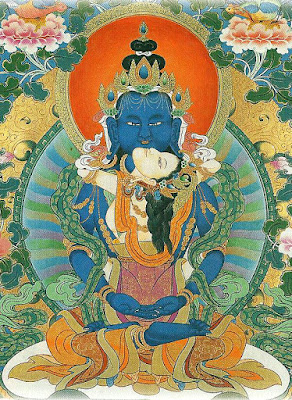 The male and female primordial buddhas Samantabhandra and Samantabhadri in union. Thangkas painted by Shawu Tsering and photographed by Jill Morley Smith are in the private collection of Gyurme Dorje.

 It was 3:00 am and they were hungry. Where could they go in the City to feed? There were hardly any people about and all the restaurants and take-away joints were closed. So after some debate they decided to go clubbing instead.
  The Reward of Cruelty, an engraving by William Hogarth, (1697–1764)
 Once upon a fatuous time, when dark desires eloped with virgin pixies, and antelopes

 The Same God So That He Obtained Of The Magus Was By Demons Be Pulled In Pieces:
Engraving by Pieter Bruegel the Elder.
The Same God So That He Obtained Of The Magus Was By Demons Be Pulled In Pieces:
Engraving by Pieter Bruegel the Elder. 
